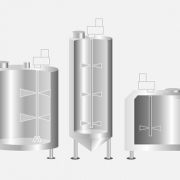
How Industrial Tank Agitators Help Produce Apple Cider and Other Seasonal Drinks
From Orchard to Glass: The Mixing Process Behind Your Favorite Fall Beverages
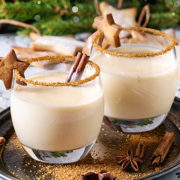
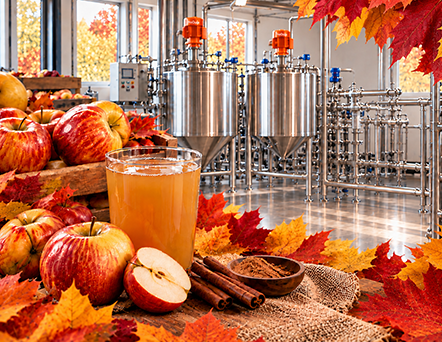 When the leaves begin to change color, apple orchards fill with visitors, pumpkin patches open their gates, and warm apple cider returns to farmers markets, grocery stores, and seasonal festivals. For many people, the taste and aroma of fresh apple cider are as much a part of autumn as football and colorful foliage.
But have you ever wondered how apple cider and other seasonal beverages are produced on a commercial scale? Behin many of the products we enjoy this time of year is a manufacturing process that depends on effective mixing.
Let’s take a closer look at apple cider production and the role industrial tank agitators can play in beverage manufacturing.
From Apples to Apple Cider
Traditional apple cider starts with freshly harvested apples. The apples are washed, ground or milled, and pressed to extract their juice. Depending on the product and manufacturing process, the juice may then be filtered, treated for food safety, blended with other ingredients, or concentrated.
Fresh cider and commercially packaged apple beverages can differ considerably in their production methods. Some products are made primarily from pressed apples, while others incorporate concentrates, sweeteners, flavorings, or spices.
When multiple ingredients are combined, manufacturers need to achieve the desired product consistency while maintaining efficient production.
That’s where industrial mixing comes into the picture.
Where Tank Agitators Enter the Process
Commercial beverage production may involve several mixing operations, depending on the product formulation.
- Blending Ingredients
Manufacturers may combine apple juice, water, concentrates, sweeteners, and other liquid ingredients in a process tank. The objective is to achieve a uniform mixture before the product moves to the next stage of production.
Industrial tank agitators help circulate the tank contents, bringing ingredients into contact and promoting consistent composition throughout the batch.
- Dissolving Ingredients
Some seasonal beverages contain sugar, acids, or powdered flavor ingredients. These materials must be incorporated into the liquid to achieve the desired formulation.
The appropriate agitator design helps circulate the liquid and promote contact between the liquid and the added ingredients. The time required depends on factors such as ingredient solubility, particle size, temperature, and liquid properties.
- Suspending Particles
Certain beverages contain pulp, spices, or other suspended ingredients. Depending on the product, mixing may be needed to distribute these materials evenly and limit settling during processing.
The impeller design, rotational speed, and tank configuration all influence the circulation pattern and the ability to keep particles suspended.
- Managing Heat Transfer
Some beverage formulations require heating or cooling during production. When a tank incorporates a jacket or another heat-transfer surface, agitation can help circulate the contents and improve heat transfer between the product and the vessel surface.
Proper mixing can help reduce temperature variations throughout the tank. The required mixing conditions depend on the product’s viscosity, the vessel geometry, and the heating or cooling requirements.
Why Mixing Requirements Matter
Although apple cider may seem like a relatively simple product, the characteristics of a liquid can have a significant effect on the mixing process.
For example, a thin apple juice blend behaves differently from a concentrated beverage containing dissolved sugars, pulp, or other ingredients. Changes in viscosity influence the amount of power required, the circulation pattern, and the selection of an appropriate impeller.
Tank geometry, batch size, ingredient addition procedures, and the desired processing time also influence agitator selection.
There is no single agitator design that is appropriate for every beverage application. The equipment must be selected according to the specific process objectives and physical properties of the product.
More Than Apple Cider
The same mixing principles apply to many other products associated with autumn and the holiday season.
Commercial food and beverage manufacturers may use industrial tank agitators to produce:
- Pumpkin-flavored beverages: Blending liquid ingredients and incorporating flavor components.
- Coffee creamers: Mixing ingredients to achieve consistent product composition.
- Sauces and condiments: Blending liquids, dissolving ingredients, and managing variations in viscosity.
- Beer and other fermented beverages: Supporting specific blending, suspension, or fermentation-related mixing requirements.
- Seasonal syrups and flavor concentrates: Combining ingredients to achieve the desired formulation and consistency.
Each application has its own requirements, but the underlying objective remains the same: achieve the required mixing result reliably and efficiently.
The Right Mixing Solution for Your Application
From seasonal beverages to everyday food products, industrial tank agitators play an important role in commercial manufacturing. Selecting the right equipment requires an understanding of the product, the process, the vessel, and the desired results.
ProQuip has designed and manufactured industrial tank agitators and mixing solutions for a wide range of food processing and other industrial applications for more than five decades.
Whether your process involves liquid blending, solids suspension, dissolution, or heat transfer, ProQuip can help you identify an agitator configuration suited to your specific requirements.
Have a mixing application to discuss? Contact ProQuip at 330-468-1850 or applications@proquipinc.com to discuss your process and determine the right mixing solution for your needs.
Happy fall from all of us at ProQuip!